Traveling has become a big aspect of my life ever since I started to venture out into what was unknown to me. The farthest places I have been to are Switzerland, Italy, France, and Spain. Each of these countries has such a rich history and being able to learn about it and actually step foot into them was such an incredible opportunity.
Switzerland
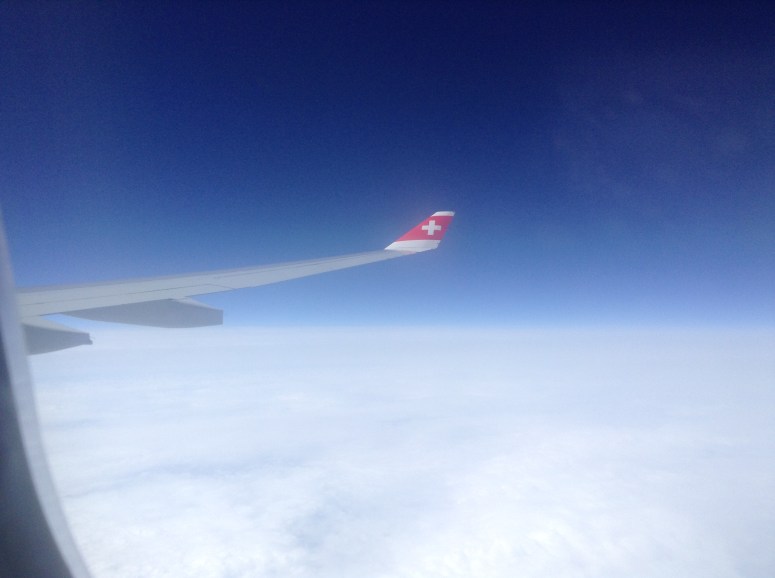
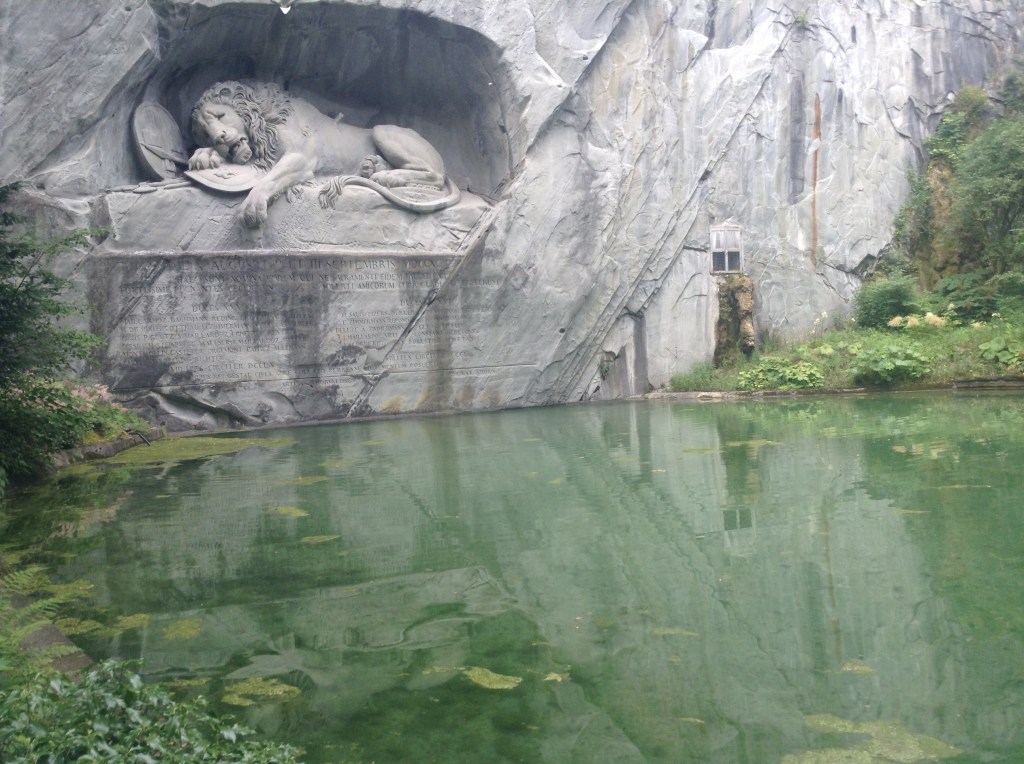
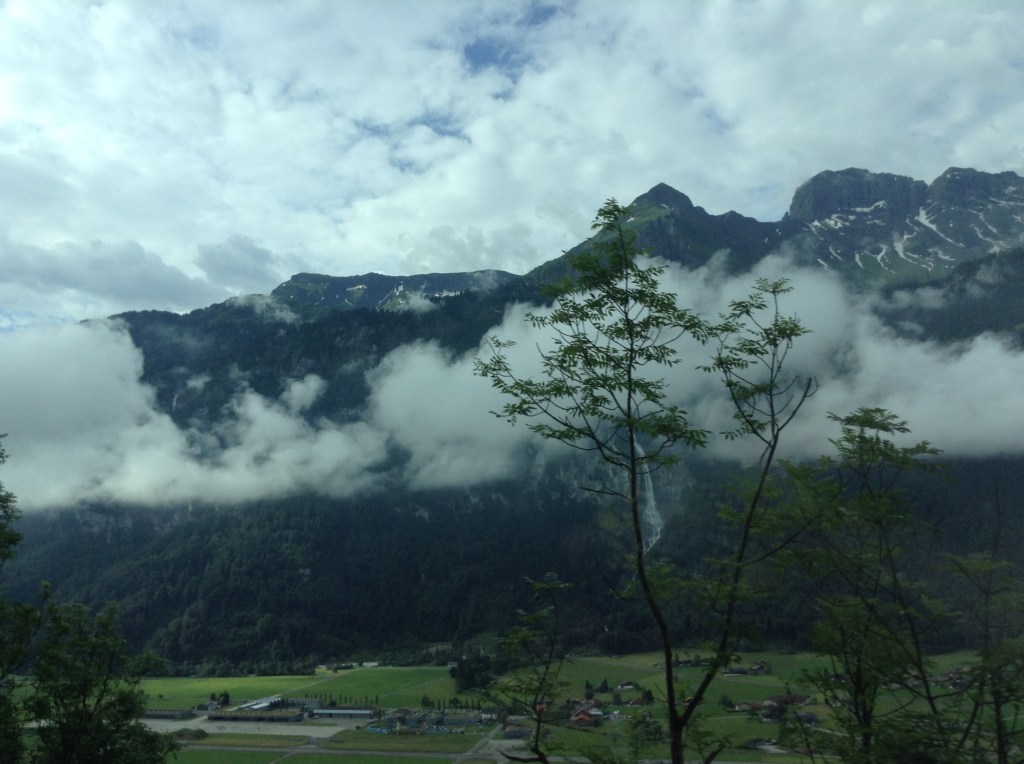
The first country I visited was Switzerland. I landed in Zurich but traveled to Lucerne for the beginning portion of our trip. My group and I stayed at the Das Hotel Sherlock Holmes in Meiringen.
Scientist believe that Switzerland was first “founded” between 20,000 and 4,000 BC by Neanderthal Men. In 58 BC, the Helvetii tribe has conflicts with Caesar’s army, but reached a peaceful period for about 300 years. In 260, German Alemannians invaded the Roman Empire. As a result of this, the four languages spoken in modern Switzerland was created.
During the 16th century, Switzerland experienced the Swiss Reformation. Catholics first started resisting in 1550, but eventually lost in 1712. As a result, the Treaty of Aarau allowed freedom of religion and spreading power between the Catholic and Protestant cantons. This was the foundation of the neutrality the country would uphold for centuries to come. Because of the choice made about 500 years earlier, Switzerland refused to join the United Nations in 1986.
During WWI and WWII, Switzerland was able to stay out of both. Civilian armies were armed for the first war which caused food prices to double. For WWII, the country was able to stay out of it because of the diverse cultures within it. Germany believed those cultures went against their goals. Switzerland emphasized its ability to defend itself in order to prevent being attacked, and mobilized everyone eligible for military service. But the nation managed to keep its neutrality.
Today, Switzerland is a major transit country for both passengers and freight between Northern and Southern Europe.
Key Facts
- There are more than 1500 lakes in Switzerland containing around 6% of Europe’s fresh water stocks. The largest of these lakes are Lake Geneva, Lake Constance and Lake Maggiore.
- Switzerland is very famous for its chocolate, cheese, banking system, watches and alpine mountain areas.
- Assisted suicide in Switzerland is legal.
- Nescafe, the world’s first instant coffee was invented in Switzerland.
- Tim Berners Lee invented the World Wide Web in Switzerland in 1989.
- Switzerland has one of the lowest crime rates in the world.
- Most Indian films are shot in Switzerland.
- Switzerland accidentally invaded its neighbor Liechtenstein in 2007.
Language
Switzerland does not have a single national language, it actually has four.
- French
- Italian
- German
- Romansh
Cultural Importance
The culture of Switzerland is multi-faceted and age-old traditions thrive. The people dwell in keeping ancient folk customs alive and wear their ethnic dresses with pride, albeit more and more only on special occasions. The landlocked country doesn’t have much in terms of resources to offer, but the people are shaped by the environment, rituals, languages and characteristics born out of necessity. Ultimately, inventiveness saved the country and finally brought economic wealth.
Switzerland is amongst the world leaders in technology, trade, and finance.
Switzerland boosts a thriving arts scene and has a rich heritage of historical and contemporary architecture. Its central position in Europe, its neutrality and shared languages with neighboring countries, made Switzerland attractive for artists and intellectuals who took refuge from political upheaval in their own country from the 19th century onward. There are about 980 museums that hold art produced by various artist.
Key Holidays
August 1st:
On August 1st, Switzerland celebrates the founding of the Swiss Confederation in 1291.
Carnival:
Although not typically an official public holiday, this is a widely-celebrated Swiss holiday.
Italy
The second country I went to was Italy. The day we moved from Switzerland to Italy was also my birthday, so I was able to wake up in one country and sleep in a completely different one! The group that I was with stayed in Lavagna, Italy.
The history of Italy is largely the history of Rome. The migrations of Indo-European peoples into Italy started around 2000 B.C. and lasted until 1000 B.C. In the 3rd century B.C., Italy was taken over by the Romans. By 264 B.C., all Italy south of Cisalpine Gaul was under the leadership of Rome. From 800 on, the Holy Roman Emperors, Roman Catholic popes, Normans, and Saracens all vied for control over various segments of the Italian peninsula.
In the beginning of WWI, Italy declared its neutrality but joined the Allies in 1915. In 1919, Benito Mussolini organized the Fascist Party and by 1935, he had created a dictatorship that sided with Adolf Hitler.
After the war, Italy moved to regain a stable economy. It became a member of NATO and later adopted the Euro in January 1999.
Key fACTS
- In central Italy, there is a fountain that flows red wine 24-hours a day
- More than 30% of Italians don’t use the internet
- The number 17 is considered unlucky in Italy
- The highest peak in Europe is in Italy. Monte Bianco (White Mountain) is 15,771 feet high and is part of the Alps.
- The fork gain popularity in Italy before any other European country because it allowed Italians to better spear and twirl their beloved spaghetti
- Mozzarella: Italian cheese balls, originally made from buffalo milk
- Italy was a kingdom until 1946.
Lanaguage
Italy, like Switzerland, has multiple national languages.
- Italian
- Catalan
Cultural Importance
Italian culture is distinctive, but because of the vast scale of Italian immigration during the 19th and 20th centuries, it’s also one of the most recognizable of all European cultures. Italian life is centered around the family unit, which includes a range of relatives from grandparents to aunts, uncles and cousins. They also form bonds with their neighbors and friends, and a person from the same area or region is referred to as a paisano.
The different mediums of art have had a significant impact on Italian culture. Italy has been the birthplace for a large portion of successful Renaissance artist whose work has survived through the years.
The different types of cuisine that Italy has produced have been a distinct factor of the culture. Multiple Italian dishes, such as pasta, pizza, tiramisu, and gelato, have been recreated all around the world.
Music plays a major role in Italian life, just like food and the arts. Some of the best in this profession are not necessarily the ones who get on stage. Some of the bigger musical genres are classical music, folk music, and opera music.
Key Holidays
January 6th:
Celebrated as a national holiday, The Epiphany, celebrated as a national holiday, marks the 12th and final day of Christmas.
Carnevale:
Italians prepare for Lent (the 40 days of abstinence before Easter) by indulging in lots of sweet treats and throwing a lively party.
November 1st:
Halloween is not widely celebrated in Italy, but November 1st is a national holiday known as Ognissanti (All Saint’s Day) that celebrates the lives of saints.
December 26th:
The day of Santo Stefano (Saint Stephen), the day after Christmas, is also a national holiday.
France
France was the third country I went to. When I visited, it was during the Euro Cup, so being able to experience and compare Europe and soccer with the United States and football was sort of ironic.
France was firs created when Hugh Capet became King of West Francia in 987. The country went through early wars with the English, for example, the Hundred Years War. At one point France was closely associated with the Avignon Papacy, and experienced wars of religion after the Reformation between a twisting combination of Catholic and Protestant. Louis XIV (1642 – 1715), helped the French nobility dominant Europe.
During the 1790s, France experienced the French Revolution under the command of Napoleon. The early twentieth century was marked by two German invasions, in 1914 and 1940, and a return to a democratic republic after liberation. France is currently in its Fifth Republic, established in 1959 during upheavals in society.
Key FACTS
- France is the largest country in the EU, and known as ‘the hexagon’
- Louis XIX was the king of France for just 20 minutes, the shortest ever reign
- In France you can marry a dead person
- The world’s first artificial heart transplant and face transplant both took place in France
- The oldest recorded human voice is French
- It is against the law to carry live snails on a high-speed train in France without their own tickets
Language
France also has multiple national languages
- French
- Basque
Cultural Importance
France reached a worldwide market with the help of colonialism and global trade. French artistic, culinary, and sartorial styles influenced the high and popular cultures of countries throughout the world. Most of France’s culture was influenced by the courts and monasteries. France’s culture started to progress after the Renaissance, when literature, art, music, and architecture thrived.
When France started to colonize around the world, the country’s ideas and beliefs started to spread around with them. The colonies were influenced by the new cultures and different styles of music, art, and literature.
Key Holidays
May 1st:
International labour day
May 8th:
Commemoration of the end of WW2
July 14th:
“Bastille day”, in France it’s usually simply called “Fête nationale”
November 1st:
The Catholic holy day of La Toussaint or All Saints. A more private affair where families place flowers on graves in honor of dead relatives, and then go home for a huge lunch.
Spain
The last country I went to on my trip was Spain. Here, I learned about how some of the architecture was influenced by some iconic films showing how the films affected the world.
In around 1100 B.C.E, Phoenicians traders started to set up trading colonies that went along the Spanish coastline.When Phoenicia fell, the Iberian peninsula came under the rule of Carthage (present day Tunisia), but was occupied by Rome after the Punic Wars. The Romans were able start the base for the Spanish language and culture.
In the fifth century, Spain was controlled by Visigoths, then faced Islamic invaders from Northern Africa. Their presence lasted more than seven centuries, though the Christian kingdoms to the north increased in power over the generations, gradually driving the Moors southwards. With the discovery of the “New World” by Christoper Columbus, Spain gained many treasures from their overseas empire, but a constant stream of warfare weakened resources.
During the 19th century, Spain was sharply divided between conservatives and liberals, and rural and urban society. Constantly changing governments was common during this time period. In 1931, Spain was declared as a Republic after the king, Alfonso XIII, was forced to abdicate. The Spanish Civil war erupted between 1936 – 1939 as a sort of prelude to WWII. Spain was then changed into a democracy in 1975 by King Juan Carlos I.
The country celebrated a cultural renaissance in the 1980’s and 1990’s, and in 1992 hosted both the Summer Olympics in Barcelona and the Expo ’92 in Sevilla.
Key Facts
- The Sagrada Familia church has been under construction for over 130 years.
- The is an annual festival in Spain named “La Tomatina” where thousands of tomatoes are thrown at each other.
- Sobrino de Botin is the world’s oldest restaurant and is continuously operating in Spain.
- It is legal to be nude in Spain.
- The Eiffel Tower was originally supposed to be built in Barcelona, Spain.
- Naming a kid Judas, Cain, and Mandarina is illegal in Spain.
Languages
Unlike the other countries, Spain has only one national language
- Spanish
Cultural Importance
Spain has had a large influence in the arts. In the Golden Age, some of the dominant figures were from Toledo and in the 20th century, a new boom of artists emerged with Pablo Picasso, Juan Gris, Joan Miró and Salvador Dalí.
In the 1790’s, the Spanish guitar was invented in Andalusia, A Spanish guitar was a Moorish lute with a sixth string added to it. Today, Flamenco, music rooted in the cante jondo (deep song) of the gitanos (gypsies), is known all around the world. The most well known Flamenco guitarist is Paco de Lucia
Key Holidays
January 6th:
Epiphany.
Week Before Easter:
Semana Santa, Easter Monday is not a public holiday, except in Catalonia and Valencia.
May 1st:
Worker’s Day
October 12th:
National Day.
November 1st:
All Saint’s Day
December 6th:
Constitution Day.
December 8th:
Immaculate Conception.


 Ashley's Eastern Adventures